

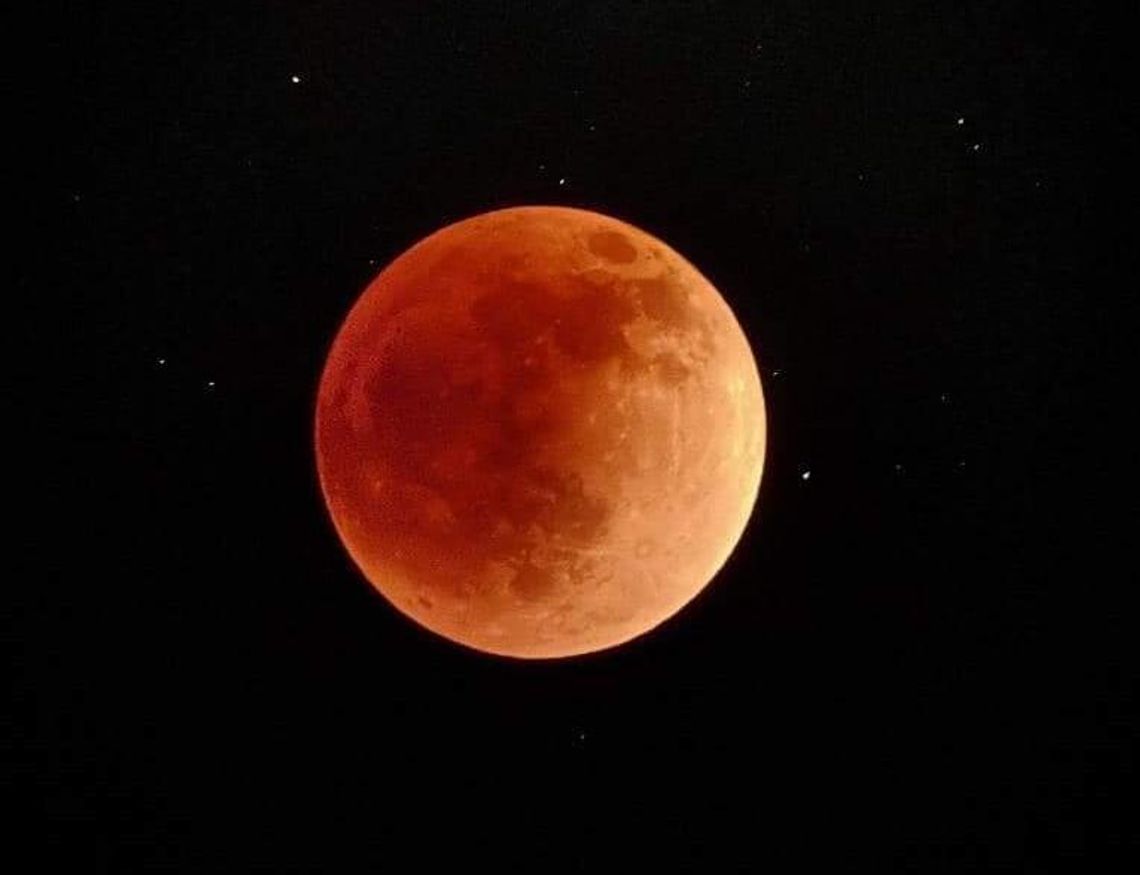
Well friends and neighbors, it’s been a while since I’ve written an astronomy article for the Boerne Star. This one is about the total lunar eclipse that we’ll have the opportunity to see (if the Cloud Gods permit) before sunrise on Tuesday, March 3.
This one is special in a few ways. For one, it’s not high in the sky like most lunar eclipses. From our vantage point in Kendall County, it will be low in the west-southwest when the eclipse starts and then due west during totality and low in the sky. You’ll need a good clear western horizon to take it all in.
For our piece of Texas, the total lunar eclipse happens just before sunrise, with the moon sinking low in the western sky. It will be deep red because it’s light passes through a thicker slice of Earth’s atmosphere. Dust, humidity, and the long path through the atmosphere near the horizon filters out most blue light and deepens the red tones. That’s why low altitude eclipses often appear richer and more dramatic than those that occur high overhead. During totality the moon will be between 12 and 24 degrees above the horizon, giving those of us in the Hill Country a rare chance to see a Blood Moon glowing just above the landscape. Less than an hour later the sun will be brightening the southeastern sky.
You’ve heard the phrase “Red Moon at Dawn." Ancient skywatchers saw this as a “liminal moment." That refers to a place or state “in between” or transitional. In this case the night is ending, day beginning, and the Moon turning red as it “falls." Related, you’ll often hear the phrase “Red Sky in Morning” which is related.
In folklore it’s often interpreted as a warning of impending bad weather: “Red Sky at Night, Sailor’s Delight. Red Sky in Morning, Sailor’s Warning."In Asian writings, dawn eclipses symbolize transitions or endings.
Photography tips: 1) Try to include trees, barns, windmills; 2) shoot wide angle, or; 3) use a telephoto lens to make the moon appear larger against foreground objects.
Here are the times to be aware of:
4:15 a.m. -- Partial phase begins, Earth’s shadow taking out a bite of the moon.
4:55 to 5:40 a.m. -- This is the prime window. Moon enters totality at 5:04 am. As the moon both heads into totality and gets lower to the horizon, it will become more red.
6:02 a.m. -- Totality ends with the moon just 12 degrees above the horizon.
6:58 a.m. --The sky is brightening in the southeast and the moon is already below the horizon.




Comment
Comments